
How to Measure the ROI of Your Community Health Fair : A Data-Driven Framework for Partners
- Terrence Hight, Jr., MBA

- 3 hours ago
- 5 min read
For many healthcare organizations, community health fairs have long been viewed as a "black box." While these events are high-energy and mission-aligned, they are often difficult to quantify beyond simple attendance numbers. In an era where every healthcare dollar must be justified by outcomes, the lack of robust data has made it challenging for partners to view health fairs as a core strategic investment rather than a philanthropic line item.
At Hight Health, we strive to change that narrative. We work tirelessly to bridge the gap between community outreach and clinical outcomes. We believe that when you connect underserved populations to healthcare resources, the impact should be measurable, repeatable, and scalable.
This guide provides our Ecosystem of Partners: including health systems, payers, and government agencies: with a comprehensive, data-driven framework to measure the Social Return on Investment (SROI) and financial ROI of community health fairs.

Redefining ROI: From Bottom Line to Social Impact
Traditional Return on Investment (ROI) in healthcare typically focuses on direct revenue versus costs. However, community health initiatives require a broader lens. We advocate for a "Value on Investment" (VOI) approach that considers health equity, patient trust, and long-term cost avoidance.
The Financial ROI Formula
At its simplest, financial ROI measures the cost savings or revenue generated compared to the program costs:
ROI = (Benefits (Savings/Revenue) – Program Costs) / Program Costs
For a healthcare partner, "Benefits" might include:
Avoided Emergency Department (ED) Visits: The cost difference between an ED visit and a primary care visit for an attendee who was successfully connected to a clinic.
New Patient Revenue: The lifetime value of new patients who registered with a primary care provider during the event.
Chronic Disease Management: Savings from early detection and management of conditions like hypertension or diabetes.
The Social Return on Investment (SROI)
SROI goes a step further by monetizing the social and environmental outcomes. For example, if a health fair leads to improved health literacy, how much is that worth to the community in the long run? By using financial proxies: such as the average cost difference between controlled and uncontrolled hypertension: we can calculate a net present value of social outcomes.
The Hight Health Data-Driven Framework
To help our Ecosystem Partners move beyond anecdotal evidence, we have developed a structured framework that tracks impact through three distinct phases: Pre-Event, Event Execution, and Post-Event Longitudinal Tracking.
Phase 1: Pre-Event Logic Modeling
Before a single tent or table is set up, we work with our Ecosystem Partners to define what success looks like. This involves creating a "Theory of Change."
Inputs: Staff time, venue costs, clinical supplies, and outreach efforts.
Activities: Screenings, vaccinations, social service referrals, and health education workshops.
Outputs: The immediate numbers: how many people were screened? How many vaccines were administered?
Outcomes: The mid-to-long-term changes: % of attendees who followed up with a doctor or reported improved health behaviors.
Phase 2: High-Resolution Event Data Collection
During the event, data collection must be seamless and non-intrusive. We utilize digital registration and QR codes to capture real-time engagement data without creating barriers for the community.
Key Metrics to Capture:
Demographics & SDOH: Understanding the specific Social Determinants of Health (SDOH) facing the attendees (e.g., food insecurity, housing instability).
Service Utilization: Tracking which resources (vision screenings, dental exams, mental health info) were most in demand.
Referral Completion: Recording every referral made to a local clinic or CBO.
Progress Log: Milestones in Community Impact
To maintain transparency and highlight our ongoing momentum, we track the progress of our data integration across our major summits and fairs.
August 2025 Update: Successfully integrated real-time referral tracking for the "Healthy Hearts & Minds" initiative.
January 2026 Milestone: Reached 125+ healthcare partnerships, allowing for deeper data sharing and clinical follow-up.
July 2026 Current Status: Now providing partners with customized impact dashboards that display real-time ROI projections based on event engagement.
Calculating the Numbers: A Step-by-Step Guide for Partners
For partners looking to present these findings to their boards or stakeholders, follow this structured process:
1. Identify Your Perspective
Are you measuring ROI for a health system (focus on new patient growth) or a payer (focus on care gap closure and member retention)? Your perspective determines which "benefits" are prioritized in the formula.
2. Quantify the Investment
Be thorough in tracking costs. Include direct costs (clinical staff, marketing) and indirect costs (planning time, data analysis).
3. Assign Financial Proxies
This is where the data becomes powerful. Use industry standards to assign value to outcomes.
Example: If 50 attendees with high blood pressure were referred to a primary care provider and 20 attended their follow-up, you can estimate the savings from avoided hospitalizations related to uncontrolled hypertension.
4. Adjust for Attribution
In data science, we must account for "Deadweight": what would have happened anyway? We adjust our impact scores to ensure that we are only claiming the value that was specifically triggered by the community health fair.
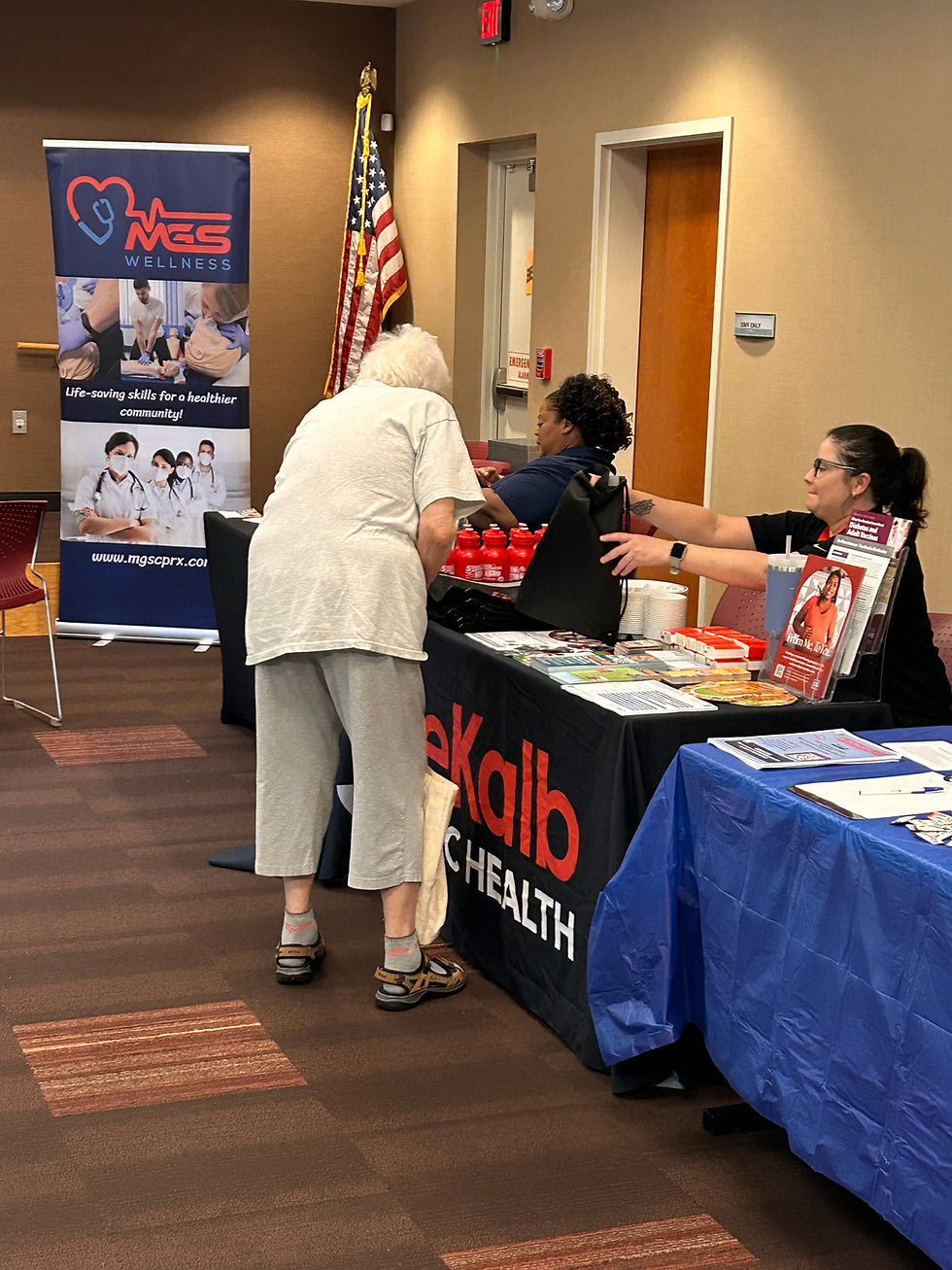
The Value on Investment (VOI) Beyond the Numbers
While hard data is essential for sustainability, it is only part of the story. High-impact community outreach builds Community Trust, a metric that is hard to quantify but impossible to ignore.
When a community member says, "I got some identification and now I'm able to do some things I wasn't able to do, thanks to Hight Health!": that represents a fundamental shift in their relationship with the healthcare system. This trust leads to higher adherence to medical advice, better long-term outcomes, and a reduction in the historical barriers that have underserved these populations for decades.
High Health’s Commitment to Social Impact
Our mission is to make healthcare accessible as a fundamental right. By providing our partners with data-driven insights, we enable them to maximize their community impact and justify the continued expansion of no-cost health programs.
We have already connected nearly 10,000 people to essential healthcare services across 55 underserved communities. Each of these connections represents a data point in a much larger story of health equity.

Video Resource: How We Do What We Do Watch here: https://youtu.be/ptE5EUEph8k
Conclusion: Transform Your Outreach into Infrastructure
The transition from a "one-off event" to a "sustainable health program" happens when you embrace data. By using the framework outlined above, our partners can move from anecdotal success to proven, measurable impact.
We encourage you to check out our recent case studies to see how we have applied this framework to events like the Inaugural Women's Health & Wellness Summit. Stay updated on our upcoming developments as we continue to refine our data models to better serve our community and our partners.
If you are ready to strengthen your local health impact and want to learn more about our collaborative service model, we invite you to connect with us. Let’s work together to make healthcare accessible and measurable for everyone.
Comments